

An Immigrant History of Ordinary People, Not Heroes
Heroes may be born in turbulent times, but history is completed by ordinary people who open their doors every morning to start the day.
- For the ‘silent giants’ who have steadfastly supported Canada from the backstage where the spotlight is dimmed.
- The steam of dry cleaners and the all-night labor at convenience stores are a greater history than the heroic tales on the front page.
- If the lives of ordinary neighbors go unrecorded, our immigrant history is merely a rootless tree.
There is a familiar scene I witness every time I attend a ceremony or event in the Korean community. Heads of organizations in dapper suits, businessmen known for their success, and political hopefuls claiming to have entered mainstream society stand on the podium under flashy lights. Cameras capture their smiles, and microphones amplify their success stories. Of course, I have no intention of disparaging their achievements. Their efforts to build a legacy in this barren immigrant land deserve applause. However, my gaze keeps lingering outside that flashy stage, in the darkness.
Those who have been immigrants for over 20 years know that the ‘real’ Korean-Canadians they have met during that time are not the heroes who appear on the front page of newspapers. The true heroes were the people who woke up at 5 a.m. to knead donut dough, the dry cleaner owners who ironed clothes while covered in the smell of harsh solvents, and our neighbors who guarded convenience store counters late at night dealing with intoxicated customers. What formed the vast forest of the Canadian Korean society today was not a few sparsely risen giant trees, but these countless ‘ordinary grass roots’ that grabbed the soil tightly while enduring the wind and rain. We often mistake history for ‘biographies of great men.’ However, true immigrant history should be the life history of ordinary people. That is because the real atmosphere of the era is contained therein. Yet, our community is uniquely obsessed with the ‘myth of success’ and is stingy when it comes to recording the lives of the ordinary majority. The stories of raising children while running dry cleaners, convenience stores, gas stations, and restaurants are often dismissed as merely ‘tales of hardship’ and treated as a past one wants to forget quickly.
Let’s look at the examples of other ethnic groups in Canada. They do not feel ashamed of their ‘labor’ and ‘ordinariness’ but rather preserve them as proud history. Look at the Italian immigrants. They proudly remember their ancestors who paved the subways and roads of Toronto and laid bricks as ‘construction workers.’ If you go to Woodbridge or Little Italy, statues of laborers holding shovels and pickaxes stand like heroes. They do not take famous politicians or tycoons as the symbols of their community, but the ‘ordinary fathers’ who built the foundation of the city with rough and rugged hands. Because of that pride, Italian descendants perceive their roots firmly.
The Chinese community is the same. They constantly unearth and commemorate the stories of nameless laborers who sacrificed their lives being mobilized for the construction of the transcontinental railway (CP Rail). In Vancouver’s Chinatown, a museum that reproduces the lives of poor immigrants who ran laundromats and laid railroads—not wealthy merchants—sits like a holy ground. Jews also proudly research and record the labor of their mothers and grandmothers who ran sewing machines in Montreal’s Garment District under the name of the ‘Shmatta (rag) industry.’ They know it. They know that the prosperity they enjoy today was built not on the 1% of geniuses, but on the blood and sweat of the 99% diligent workers. On the other hand, what is our reality? The lives of the first generation, who came with a single immigrant bag in the 1970s and did not shy away from all kinds of menial work, have been trapped in the frame of ‘sacrifice for children’s education.’ The exhaustion of their labor, the excitement and fear felt when opening the store door, and the memories of racism they had to swallow inside narrow counters are disappearing without a proper record. The sitcom Kim’s Convenience gained popularity, but that is merely pleasantness processed by media. In the actual field, tears thicker than laughter and life’s sorrows more dramatic than drama are scattered everywhere.
One convenience store owner worked for 20 years without taking a single day off out of 365 days. His hands were rough and always soaked in fatigue. But he did not realize the fact that he was a worker keeping the capillaries of the Canadian economy flowing. He would just give a self-deprecating laugh, saying, “I do this work because I’m uneducated.” That sight was so heartbreaking. The convenience store with its lights on at 2 a.m. is like a lighthouse in the city, and the neighborhood dry cleaner is an essential space that maintains the dignity of the residents. They are truly the ‘hidden heroes’ who have supported Canadian society from the bottom up. Now we must turn our gaze. Just as we celebrate the emergence of a few successful entrepreneurs or politicians, we must—no, even more passionately—illuminate the lives of ordinary neighbors. Anthropological value lies not in scarcity but in universality. What descendants 100 years from now will be curious about is not who the president of the Korean association was in 2026. They will want to know what food the Korean immigrants of 2026 ate, where and what they played on weekends, and what dreams they dreamed inside narrow shops.
I would like to make a concrete proposal. We must collect old ledgers found in each home, hand-stained work tools, and faded photos taken on store opening days. We must archive these digitally to create a ‘Hall of Fame for Ordinary People.’ There, instead of success stories about achieving certain annual sales, stories about guarding the store with a trembling heart on the day a robber entered, or a warm word of greeting handed to a customer in broken English should be recorded.
Also, what we must teach the second and third generations is not ‘how to succeed’ but ‘how we survived.’ We must teach the value of the sweat the parents' generation shed and the sanctity of that labor. We should not say, “Study hard so you don't run a convenience store,” but be able to say, “The convenience store your parents kept raised you and supported this society.” Only then can my children, and their children, root themselves proudly without feeling intimidated as members of the multicultural society called Canada.
The Irish poet William Yeats said, "Songs do not come from land not trodden by feet." Our immigrant history is not a story of heroes walking above the clouds. It is a story of ordinary people who stepped on, packed down, and cultivated barren land with bare feet. In the steam of the dry cleaner, in the jingling bell of the convenience store, and in the clattering noise of the restaurant kitchen, the true melody of our history breathes.
I dream. In our immigrant history museum to be completed in the distant future, I hope that placed in the highest spot will not be a flashy trophy, but a 30-year-old iron from a dry cleaner and a worn apron from a convenience store. And I hope the descendants passing before them will bow their heads reverently, saying, "These people made us." Heroes are born in turbulent times, but history is completed by ordinary people who open the door every morning to start the day. Rediscovering that ordinary greatness is the most urgent task given to us right now.
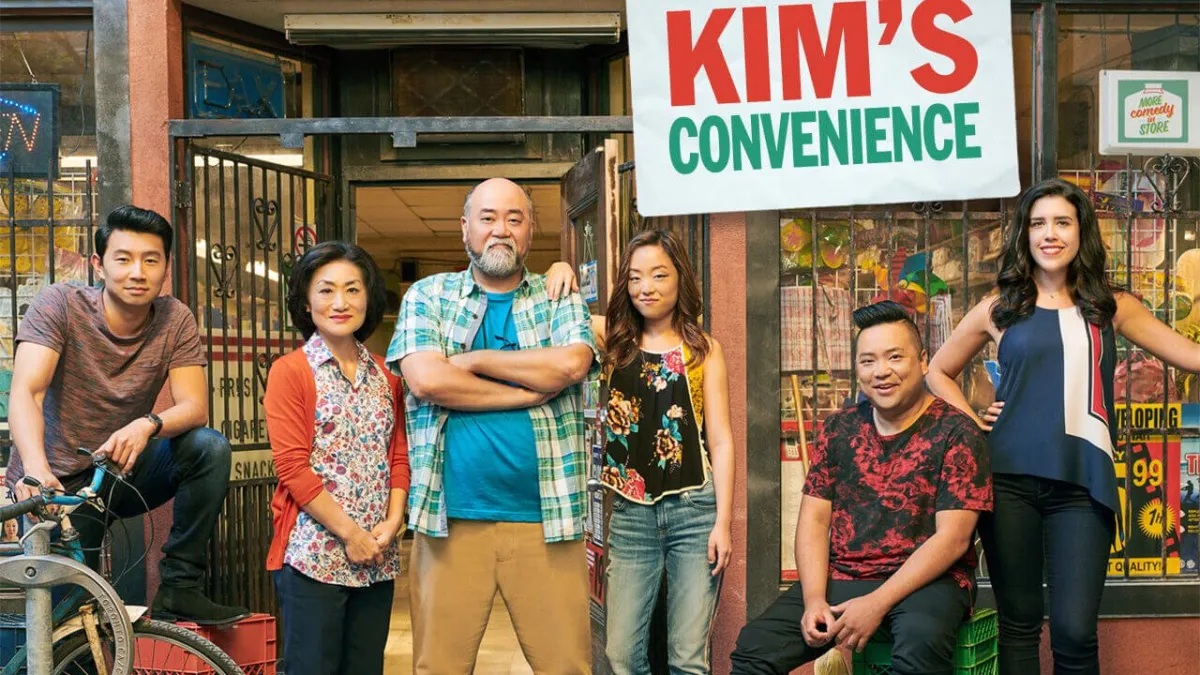
Kim's Convenience is a Canadian sitcom that aired on CBC from 2016 to 2021, depicting the humorous daily life of the Kim family, Korean-Canadians running a convenience store in Toronto. The core episodes revolve around the generational and cultural differences between the father (Appa), mother (Umma), daughter Janet, and son Jung, unraveling the warm humor and conflicts of an immigrant family. Based on the play of the same name by Korean-Canadian writer Ins Choi, it is available for streaming on Netflix and gained great popularity over its five seasons.
(This content was created using generative AI, with partial edits and reviews by the administrator.)