

Empathy Over Success: A Senior’s Consolation
The greatest strength in a strange land comes from the rough but warm solidarity of those who walked the path first.
- Your record of trial and error serves as a greater compass for your juniors than any trophy of success.
- We must become seniors who act as companions rather than competitors—setting the table for others instead of fighting over the rice bowl.
- It is not flashy statistics that calm the anxiety of a strange land, but the rough yet sincere touch of those who came before.
An immigrant’s first winter is exceptionally cold. It isn't just because of the Canadian temperature hovering around minus 20 degrees. It is that chilling fear felt when one leaves everything familiar behind and steps into the void of an uncertain future. Everyone likely steeled themselves with a bold heart when they landed at Pearson Airport. Yet, facing the unexpected biting winds and confronting unfamiliar challenges under the Canadian sky, we all realized we were merely small, shabby strangers.
Even today, countless newcomers step onto this land carrying swollen dreams and deep fears. However, regrettably, the landscape of the Korean community they first encounter is not all that warm. The stories exchanged in online communities or over drinks are dominated by flashy tales of success: who bought a house in which area and made how much money, or whose child got into which prestigious university. To those suffering from the hopelessness of early settlement, these stories act not as hope, but as sharp daggers of relative deprivation. The self-reproach of "Why can't I be like them?" becomes the seed of "immigration depression."
Now, we must change. What seniors should hand down to juniors is not the shining result of success, but the record of desperate failures experienced along the way. What we propose is an "Archiving of Failure Tales." We need to bring out and share those memories of opening a store only to hear crickets chirp, the stories of unfair losses suffered due to poor English, and those embarrassing moments of receiving a termination notice because of an inability to adapt to Canadian workplace culture. I am certain that historically, what makes a person grow is not the statue of a hero, but the sharp shards of failure, like pieces of broken pottery.
Let us steal some wisdom from other ethnic groups within Canada. The mentoring culture of the Indian (South Asian) community gives us great insight. They hold immense influence in logistics, trucking, and the IT sector. The secret lies not in "competition" but in "towing." A senior who has settled first does not see a newly arrived junior as a potential competitor. They guide the junior into their field, arranging everything from how to get a driver’s license to route pioneering and even initial funding. The belief that "your growth expands the pie for our community"—this is the power that pushed them into the mainstream of the Canadian economy.
The example of the Filipino community is equally surprising. They have built an unrivaled network in the nursing and caregiver sectors. When a new immigrant fails a certification exam or fails to get a job, they do not attribute it to personal incompetence. Seniors gather to form study groups, share past exam questions, and pass on interview know-how. To them, mentoring is not a grandiose event, but an extension of a "dining table community" where they gather every weekend to pat each other on the back. Because of that warm solidarity, Filipino immigrants can work confidently without being intimidated in unfamiliar hospital corridors.
The Jewish community is even more organized. They manage "failure" as an asset. Beyond the "Gemach" system, which provides interest-free loans to newcomers who have failed in business, they have a perfectly established system where seniors become mentors to juniors in each profession. When a junior fails, instead of blaming them by saying, "See, I told you so," they reach out a hand and say, "I went bankrupt in the exact same way 30 years ago. Let me tell you how I stood back up."
Additionally, the "Hometown Association Oral History Project" (2016) of the Mexican community in the U.S. is quite moving. It is a project that recorded the community history formed through "Hometown Associations (HTAs)" by immigrants from Mexican villages via oral testimony; I thought this held great significance for us as well.
On the other hand, what do we look like? We must reflect on whether the "Law of the Jungle"—where we tear each other down in a narrow immigrant society, monopolize information, and view newcomers merely as targets for exploitation—is still prevalent. Is cold neglect, packaged as "cool advice" like "Canada is just like this, survive on your own," being passed around?
I propose this: What we need is not an "Introduction to Success," but a "Special Lecture on Failure." Korean associations, religious groups, and various professional organizations must take the lead in sending the message, "It’s okay to make mistakes." Let’s hold talk concerts where seniors candidly, sometimes humorously and sometimes seriously, confess their "dark histories." Let’s weave those stories into books and share them on YouTube. That would be a light brighter than a lighthouse for newcomers walking through pitch-black darkness.
Mentoring is not teaching. It is embracing. It is the process of confirming that the tears the senior shed 30 years ago are the same tears the junior is shedding now, and that this pain is not theirs alone. The confession "I struggled a lot, too" offers far greater comfort than the words "Cheer up."
A shift in perception from competitor to companion is urgent. The new owner of a fried chicken shop is not an enemy stealing my customers, but a comrade raising the status of Korean food together. A junior who just got a job is not a threat to my position, but a sturdy pillar who will support this society after I retire. Someone once said while looking at their grown children: The reason these children, who came to Canada at a young age, received public education, and became decent members of society, could take root without wavering was thanks to the warm gaze of neighbors who helped us knowingly and unknowingly. Now, it is our turn to repay that debt.
Let’s buy a warm meal for someone who arrived at the airport today, or for someone losing sleep ahead of their first day of work. And instead of a condescending sermon, if you are an immigrant senior, offer rough but sincere comfort:
"It’s okay to fail. having gone through it ourselves, we know that failure will eventually make you a stronger Canadian. We are right behind you."
This single phrase will become a force that binds our Korean community together more powerfully than any economic indicator from Statistics Canada.
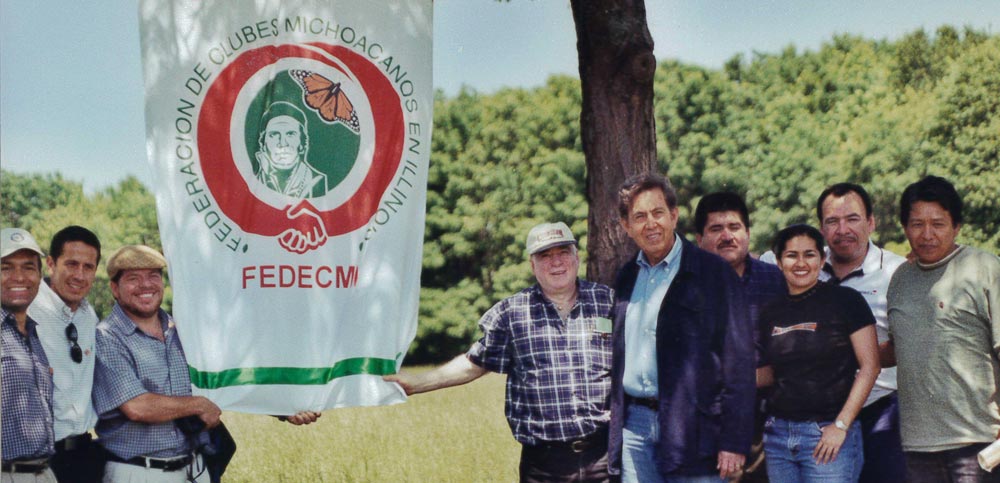
Mexican Hometown Associations Oral History Project (2016)
Hometown Associations (HTAs) are organizations established in the U.S. by immigrants from specific Mexican villages for the purposes of fundraising, hosting cultural events, and supporting hometown development. This project recorded the history of the communities formed through these HTAs via oral testimonies, collecting the stories of leaders and members around 2016. The interviews focused on Mexican communities in major cities such as Chicago and Los Angeles, capturing their settlement processes, mutual aid efforts, and voting rights activism. The collection has been digitized and is accessible online.
(This content was created using generative AI, with partial edits and reviews by the administrator.)